Bioeconomy
WHAT ARE BIOECONOMY?
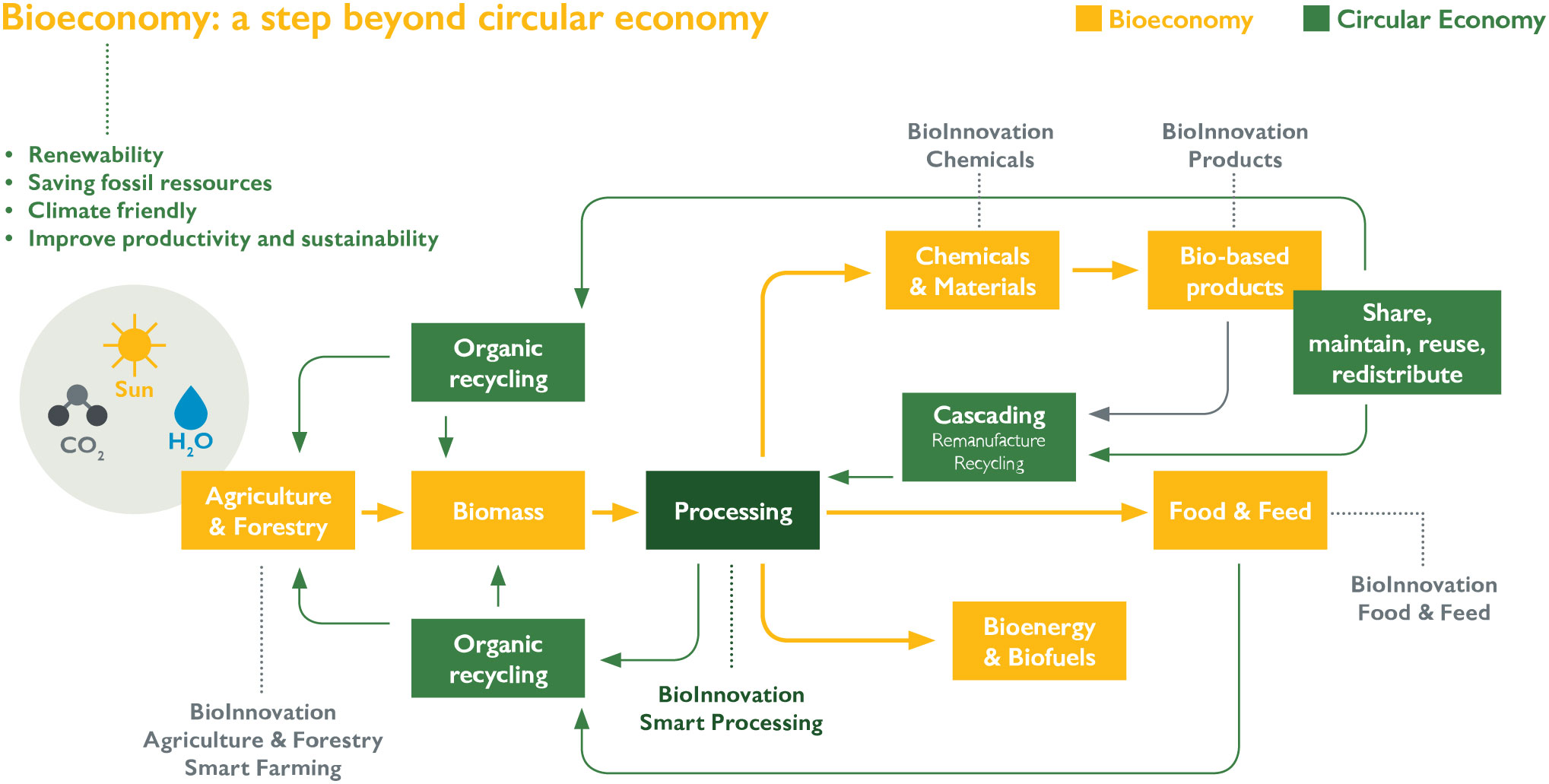
The bioeconomy is defined as the activity that delivers sustainable solutions based on renewable biological resources – such as plants, animals and microorganisms – to create added value in many services such as personal care, house-hold products, pharmaceuticals, lubricants, coatings, polymers and many others.
It is emerging as a transformative force for sustainable development, leveraging biological resources, innovative technologies and circular economy principles to address global environmental challenges. The bioeconomy offers an opportunity to reconcile economic growth with sustainability and environmental responsibility as it englobes products, services, science and technologies from ranging sectors such as agriculture, forestry, fisheries and aquaculture to value chains based on biomass processing, biomanufacturing and biotechnologies.
The oleochemical industry plays a pivotal role in advancing bioeconomy principles and introduce bio-based solutions. As a longestablished pillar of the European bioeconomy, oleochemicals are bio-based chemicals that transforms plant oils and animal rendered fats (category 3) into a wide range of biobased products.
Bio-based solutions are revolutionising the way societies address essential needs whilst enabling the development of low carbon production systems and reduce waste while unlocking new innovations across multiple industrial sectors. More importantly, this approach reduces reliance on fossil based feedstocks, decreases greenhouse gas emissions and promotes sustainability.
By driving the shift away from fossilbased feedstocks and supporting the development of sustainable, circular value chains the oleochemical industry reinforces Europe’s industrial competitiveness.
In 2025 the European Commission charts it’s new EU Bioeconomy Strategy to foster sustainable and
a nature-positive bioeconomy by:
- Ensuring the long-term competitiveness and investment security
- Increasing resource-efficient and circular use of biological resources
- Securing the competitive and sustainable supply of biomass
- Positioning the EU in the rapidly expanding international market
Bioeconomy strategies also exist in many of the EU Member States reflecting diverse national
strengths and priorities. See here the bioeconomy in different countries.
See APAG’s statement on the EU Bioeconomy Strategy, here: Fact Sheet